
How to Probate Self-Custodied Bitcoin

If you (or your loved one) are a Bitcoiner, you may have chosen self-custody—keeping your bitcoin in a personal wallet rather than a crypto exchange. When it comes time to probate self-custodied bitcoin, things can get complicated.
The good news? I’m here to walk you through it. Bitcoin is an area I’m passionate about—I love helping clients navigate its unique challenges. So, let’s get started.
How do I probate self-custodied bitcoin?
- How to find self-custodied bitcoin owned by a deceased person? Where should you look first?
- What happens to self-custodied bitcoin during probate? Should you hold or sell?
- Help, I can’t find a will! What if the deceased didn’t leave a will for their bitcoin?
- Understand what documents you’ll need to probate bitcoin in an estate
- What’s better: DIY or hire a professional to assist with probating bitcoin
- Learn the steps to secure a bitcoin wallet during the probate process
- What taxes apply to inherited self-custodied bitcoin? How much is subject to estate tax?
- What fees should you expect—what does it cost to probate self-custodied bitcoin?
How to find self-custodied bitcoin owned by a deceased person?
The first (and most important) step is to find the private key you’ll need to access the deceased’s bitcoin.
How to access a deceased person’s bitcoin without the private key?
The answer is short and simple: you can’t. To gain custody of your loved one’s self-custodied bitcoin, you MUST have the private key. Without it, the bitcoin is unrecoverable.
How to handle lost or forgotten private keys in a probate scenario?
If the private key is lost, the executor must conduct a thorough and diligent search, keeping in mind all the different forms the key could take. It could be a seed phrase written down on a piece of paper. Or it could be hidden in an encrypted file or a hardware wallet (a small device that could look like a USB drive or a calculator or a smart phone).
To cover all the bases, a good executor will search in four places:
- “Safe” spaces – Places where you keep valuables or important items under lock and key, such as a home safe, bank safe deposit box, locked desk drawer, file cabinet, strong box, gun safe, etc.
- Personal spaces – Any other places or containers where your loved one might have stored valuable items. Think: jewelry, family albums, heirlooms, personal papers (taxes, wills).
- Digital spaces – All devices owned by the deceased (including desktop, laptop and mobile), as well as cloud storage and encrypted files.
- Third parties – These are services that your loved one may have used to provide an extra layer of security for their bitcoin (ex: Casa, Unchained). Sifting through emails, receipts and credit card statements might uncover a third-party service you could contact for help accessing the bitcoin.
What happens to self-custodied bitcoin during probate?

Executor custody of the bitcoin
The executor is the person appointed to manage the deceased person’s estate. Once the executor gains possession of the bitcoin, they must hold it securely throughout the entire probate process. This can take a year or more, depending on how complex the estate is.
During probate, the executor must take the same security measures that you or your loved one would. That includes making a plan for what happens if they (the executor) die during probate. Like I said, probate can be a very lengthy process. If the executor suddenly passes away, and they haven’t left clear instructions for how to take custody of the bitcoin, the next person appointed executor will have no idea how to recover it. Bottom line: the bitcoin could be lost forever.
Executors also need to decide whether to keep the existing wallet, transfer funds to a new one or take another approach—all key decisions that require thoughtful analysis.
Selling the deceased’s bitcoin
One of the toughest questions for the executor is whether to hold or sell the bitcoin during probate. You can read more about that in my previous post.
If the decision is to sell, be aware that most major cryptocurrency exchanges don’t make it easy to set up estate or EIN accounts for bitcoin. Alternatives include private buyers, OTC (over-the-counter) trading desks or institutional accounts on centralized exchanges (CEXs). Keep in mind, though, that institutional accounts are usually geared toward firms (like hedge funds or family offices), not estates. So using them to probate bitcoin can be tricky.
If all this sounds complicated, that’s because it is. So you may consider hiring a professional executor who can weigh the options and manage the transaction for you.
What if the deceased didn’t leave a will for their bitcoin?

When someone dies “intestate” (without a valid will), the process is the same whether they owned bitcoin or just traditional assets.
The court will issue letters of administration appointing an individual to serve as the estate’s administrator. Any property will be distributed according to the state’s default inheritance laws, which usually prioritize the person’s “next-of-kin” (closest living relatives).
What documents are required to probate bitcoin in an estate?

Legal documents
To probate bitcoin, you’ll need your loved one’s death certificate and letters testamentary (court-issued documents certifying your authority as the executor of the estate). As explained above, if there’s no will, the court will issue letters of administration.
Custody “documents”
Most of these aren’t actual documents, but you’ll need them in order to access the bitcoin. They might include:
- Seed phrases or private keys – The 12 or 24 secret words that unlock access to the deceased’s bitcoin.
- Hardware wallets – Physical devices that store the private keys securely offline.
- Encrypted files – Another option for safely storing the private keys or passwords.
If the wallet is multisig (multi-signature), you’ll also need to know which third-party company the deceased used to set up the multi-sig, because the company will have a key too. Once you know who it is, you can contact them for support.
How to hire a professional to assist with probating bitcoin?

What types of professionals can I hire?
There are basically two kinds:
- A professional executor: Someone who does the executor job for a living, and therefore knows the ins and outs of probate.
- A bitcoin advisor/consultant: Someone who knows a lot about bitcoin and can advise you on any bitcoin-related decisions (but is most likely NOT familiar with probate).
Professional executors may have some general knowledge about bitcoin. But in my experience, there are very few pros who truly understand the complexities of self-custody (or even know what self-custody is).
A bitcoin advisor, on the other hand, may be very familiar with self-custody, but likely has no idea how probate laws or taxes work.
Ideally, you’ll hire someone who (like me) wears both hats: they understand the legality of probate AND the technical side of bitcoin self-custody. That way you can avoid the hassle and extra cost of bringing in a separate consultant. To learn more, check out my longer post about how to hire a bitcoin executor.
What role does an executor play in probating self-custodied bitcoin?
As explained earlier, the executor has three important jobs:
- Gain custody of the bitcoin by locating the private keys, seed phrase, etc.
- Securely hold the bitcoin throughout the entire probate process (which can take 1+ year).
- Understand all options for holding, selling or delivering the bitcoin to heirs.
Because all these steps require in-depth knowledge of bitcoin, it’s usually a smart move to hire a professional executor who understands crypto.
What legal risks does an executor face when managing self-custodied bitcoin?
Executors are always personally liable for anything that goes wrong with the estate, whether the asset is bitcoin or something else. If the executor makes a mistake, their own personal property (think: house, savings, kids’ college tuition) could be on the line.
This is a major reason many people choose to go with a professional executor—they don’t want the risk! Even many seasoned probate lawyers don’t want this risk, and decline to serve as executor.
A professional executor has the skills and experience to handle complex assets like bitcoin while minimizing risk. They make sure every action they take is carefully documented so that if an heir or creditor raises concerns, the executor can prove they carried out their duties properly.
With bitcoin specifically, an experienced executor will know how to document and make everything verifiable on the public blockchain. This adds another layer of accountability and protection.
How to secure a bitcoin wallet during the probate process?
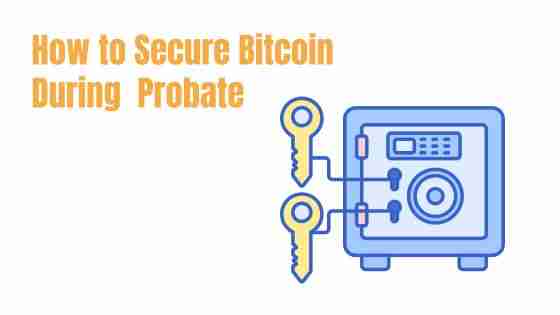
With bitcoin, there are no backups or “do-overs.” If access is lost, the funds are gone forever. That’s why it’s absolutely critical to take proper precautions during probate.
How to handle bitcoin held in a hardware wallet during probate?
If your loved one used a bitcoin hardware wallet, the executor must make sure they have every piece of info required to access it. That includes the device itself and the PIN (similar to the code you’d use to unlock your phone). If the device is older (which is often the case by the time they’re put to use), the executor might need to know how to update any outdated firmware so that the device can be used.
Finally, some wallets require a passphrase, so the executor will also need to know A) whether one exists, and B) if so, what the correct passphrase is in order to gain access.
How to move self-custodied Bitcoin to a new wallet for probate?
For added security, I recommend moving the bitcoin into a new wallet created just for the probate process. Specifically, I recommend a 2-of-3 multisig with a reputable custody service such as Casa or Unchained. In this setup, three keys exist, but only two are required to move the bitcoin.
Why a 2-of-3 multisig?
- The custody service holds one of the keys, creating redundancy.
- If the executor were to pass away during probate, the bitcoin would not be lost because the third-party service would still be able to help gain access.
- It reduces the executor’s risk of being held personally liable if the keys are misplaced or compromised.
While no system is foolproof, a 2-of-3 multisig setup provides layers of protection that single-key wallets simply can’t match.
Sound complicated? It is—and that’s exactly why naming a professional executor with bitcoin expertise can save both time and stress.
What taxes apply to inherited self-custodied bitcoin?

First, a disclaimer: none of the info shared here should be taken as tax advice. Every person’s individual tax situation is different. For real guidance, talk to me or someone who’s a professional like me.
OK, having said that, here are the main things to keep in mind.
Estate tax
In the US, the current threshold for the estate tax is $13,990,000 in total value. This means that only the value of assets owned OVER the threshold is taxable.
For example, if you own $15,000,000 worth of bitcoin, only the amount above the threshold—$1,010,000—would be subject to estate tax. For most people, this won’t be an issue unless you’re a “whale” (someone holding a very large amount of bitcoin).
Capital gains tax
The good news: in most cases, heirs won’t owe capital gains tax when they inherit bitcoin (hooray!). That’s because of “stepped-up basis.” The IRS resets the bitcoin’s value to its fair market value on the date of death, making that amount the new purchase price (or “basis”).
Here’s why that matters: if the executor sells the inherited bitcoin soon after the date of death, there’s usually little or no capital gain—so no capital gains tax. However, it’s critical that the executor or estate attorney properly documents and files the stepped-up basis with the IRS. Without that step, the heirs could lose the benefit and face tax problems later on.
What are the costs of probating self-custodied bitcoin?

Probating an estate always comes with expenses, and handling bitcoin adds a few unique ones. Here are the main costs you can expect:
Attorney fees
Most estates require a probate attorney to open the estate, get the executor appointed and address legal issues along the way. Because bitcoin is a more complex asset, attorney fees may be higher than average.
Executor fees
Executor compensation is set by state law—typically either a percentage of the estate or a “reasonable fee” based on the work required.
You don’t have to be a professional executor to do the job, and anyone who serves is legally entitled to be paid for their work—even if they’re a family member or friend. But because bitcoin custody comes with unique risks, it’s usually worth it to hire a professional. The cost is the exact same as hiring your amateur buddy or nephew, so why not have a pro handle it and make sure it’s done right?
Custody fees
Managing self-custodied bitcoin during probate may involve additional costs, such as:
- Fees for setting up a multisig wallet with a collaborative custody provider.
- OTC (over-the-counter) or centralized exchange (CEX) fees for converting bitcoin to fiat (if applicable).
- Professional or institutional account fees.
- Costs of working with a private buyer.
These costs vary widely depending on the estate and the services chosen. A professional executor or advisor with bitcoin experience can help you navigate the options and minimize unnecessary expenses.
Next steps to probating bitcoin.
Probating an estate is complex enough, and bitcoin adds an extra layer of challenges. Whether you’ve inherited bitcoin or are planning how to pass on your own, working with a professional executor can save time, reduce risk and give you peace of mind.
As a professional executor who’s also passionate about bitcoin, I love helping clients navigate this unique asset and create strategies to safeguard it for their heirs. If you’d like to chat, please use the form below to get in touch.
Contact Us for a Free Consultation
Or call 212-401-2990


